

More than a Snapshot
This lesson establishes the foundational understanding of portrait photography. At its most basic level, portrait photography is the practice of capturing a person or people by focusing their features and highlighting their presence within the frame. However, defining it purely technically overlooks the profound human element involved.
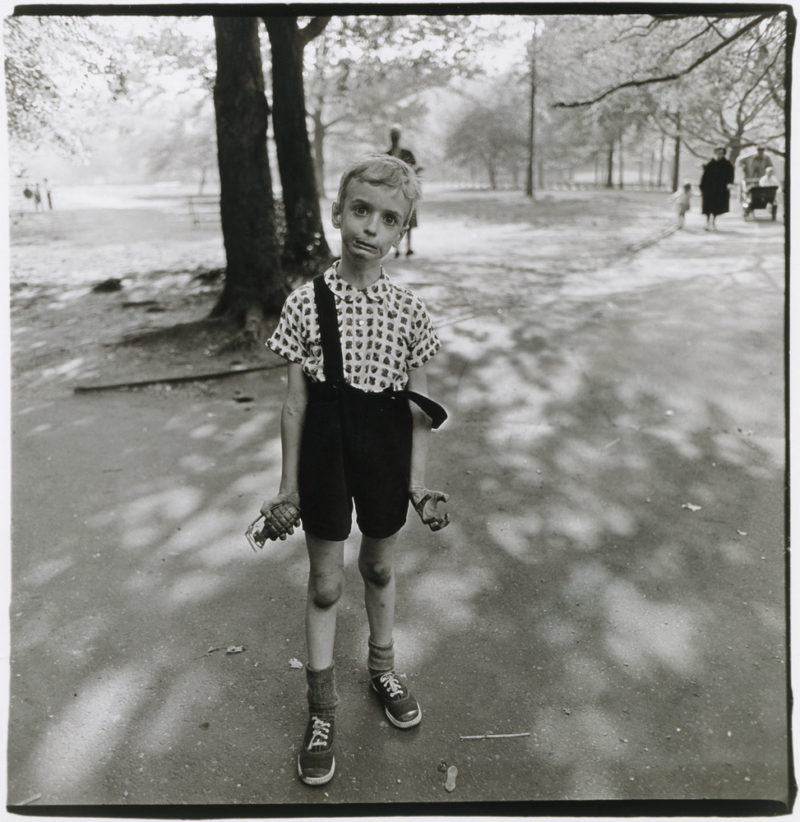
Diane Arbus, Boy with a Toy Grenade, 1962
The essence of portrait photography lies in its ability to transcend a simple image and convey something deeper about the subject. It allows the photographer to capture their personality, mood, character, or even a specific aspect of their identity. It is fundamentally about interpreting the subject and presenting a curated glimpse into who they are or what they represent at that particular moment in time. This encompasses a wide range of approaches from traditional studio portraits to candid street photography.
Shaping Stories with Light
One of the most critical components shaping a portrait is lighting. Lighting dictates the mood, emphasizes certain facial features, defines the subject’s form, and even influences the viewer’s perception of the subject.
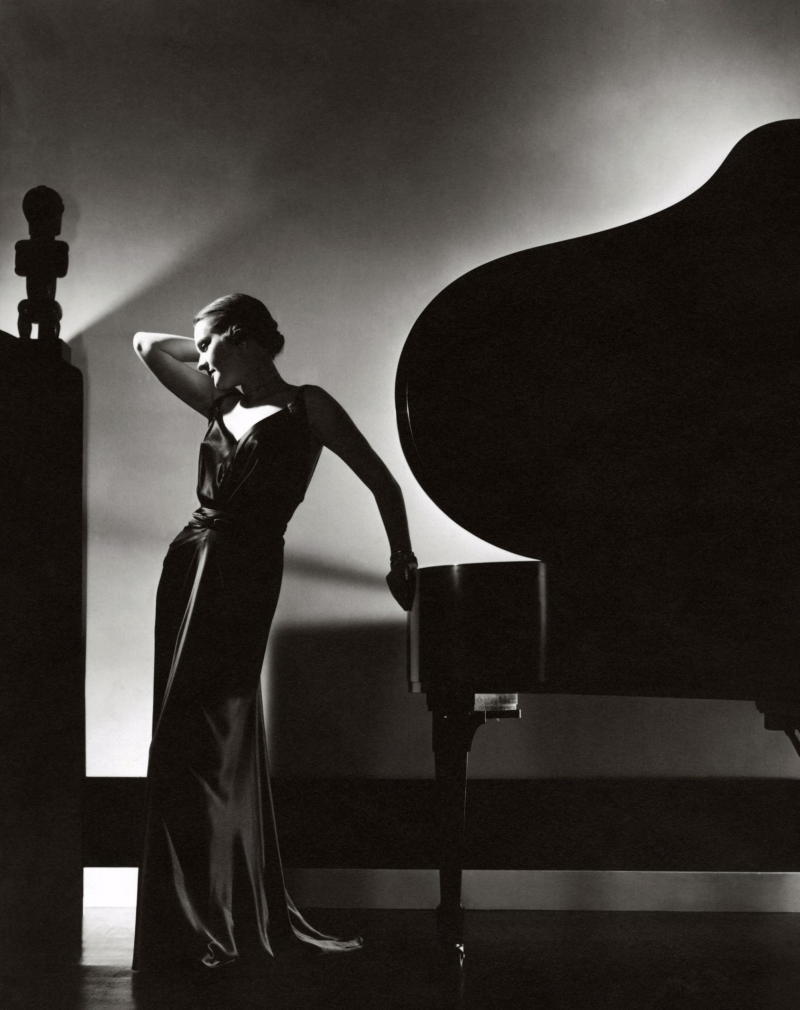
Edward Steichen Perfection in Black, 1932 copyright Conde Nast
Soft, diffused lighting often produces gentle images ideal for highlighting delicate features and creating a sense of intimacy. Harsh, directional lighting can create strong contrasts, sharp shadows, and dramatic effects, drawing attention to texture and emphasizing the subject’s presence or intensity.
The quality and direction of light are deliberate choices made by the photographer to communicate their intended feeling or focus within the portrait.
How does the lighting in a portrait influence the emotional tone conveyed to the viewer? Think about examples where soft lighting versus dramatic lighting creates distinct feelings.
Framing Ideas
Composition and framing are also fundamental components. What elements are included or excluded and how the photographer arranges these elements help tell the story.
Key principles we’ve discussed so far include:
The rule of Thirds – the subject is often placed along or within the grid for a more dynamic image,
Negative Space – areas of low visual density can be used to emphasizes solitude or importance
Positive Space – areas of high visual density help focus attention directly on the subject.
Leading Lines – visual cues lead the viewer around in the image to create cohesion and visual interest.
Get the Angle
The photographer’s choice of camera angle also plays a significant role; shooting slightly lower or higher than eye level can evoke different feelings compared to a direct eye-level view. Consider the subject and the mood you’re trying to capture. Then think about how the angle that you approach the subject could affect the final image.

Backgrounds and foreground elements must be carefully considered to avoid distraction and to support the subject’s expression or the overall theme. Does the background help tell the story of this portrait or is it there to create negative space? Make sure to check for distracting elements and compose around them.
Focus on the People
Understanding what constitutes a portrait also involves knowing its boundaries. While a full-length photograph might capture a scene involving people, it is generally not considered portrait photography unless the focus is specifically on the individuals and their portrayal. Portrait photography aims to capture the subject, often isolating them or placing them at the center of attention.
Subject interaction and engagement are crucial components that distinguish portrait photography from mere representation. Even in seemingly candid shots, the subject’s awareness of being photographed and their reaction significantly impacts the portrait’s meaning.

A successful portrait often involves some degree of connection or interaction between the photographer, the subject, and the viewer. This can be achieved through posing, directing, or simply capturing a genuine moment. The photographer’s ability to elicit the desired expression or demeanor from the subject is a vital skill.
Tell the Story
Narrative photography is a related sub-genre of portrait photography. With narrative photography, the artist works to tell a story about the subject along with capturing their likeness. A well made narrative will often include multiple images of the subject to tell a linear story, or may include objects or settings that help tell the story of that person.

Reportage or photo journalism are considered narrative photography. Photo journalism has long and important roots that are outside the scope of this module but we will go more in depth in our module on the history of portrait photography.
What distinguishes portrait photography and narrative from other types of photography that capture people? What is the visual language of portraits?
Getting Technical
Technical execution encompasses the camera settings, lens choice, and image processing used. The aperture determines the depth of field, often used to blur distracting backgrounds (shallow depth of field, large aperture) and keep the subject sharp.
Shutter speed can influence whether the subject is sharp or slightly motion-blurred, and ISO settings affect the light sensitivity and potential image noise.
_20260217193540984.jpg?ou=269229 "portrait of salvador dali")
While technical proficiency is necessary, effective portrait photography relies heavily on artistic vision and emotional connection rather than just technical skill.
How might the choice of a wide aperture (low f-number) versus a narrow aperture (high f-number) impact the feeling of a portrait?
Context Matters
Context provided by the setting and surrounding elements contributes significantly to the portrait’s narrative. Whether the portrait is a formal studio shot, an informal snapshot, or a carefully composed environmental portrait, the context shapes the story being told. Elements like clothing, props, location details, and the time of day can all add layers of meaning, hinting at the subject’s occupation, personality, or the nature of the situation being documented.
Portrait photography is defined not just by its subject matter, but by the intentionality with which the photographer captures it. As artists we focus on conveying specific information or an emotional response through careful control of lighting, composition, subject engagement, and context. These core components work together to create an image that goes beyond a flat record, offering an interpretation of humanity.